Getting a SIM Card and Phone Setup in China

The Three Big Carriers
China has three major mobile carriers, and honestly, any of them will work just fine for your needs:
China Mobile (中国移动) - The biggest, most coverage
China Unicom (中国联通) - Middle ground, solid network
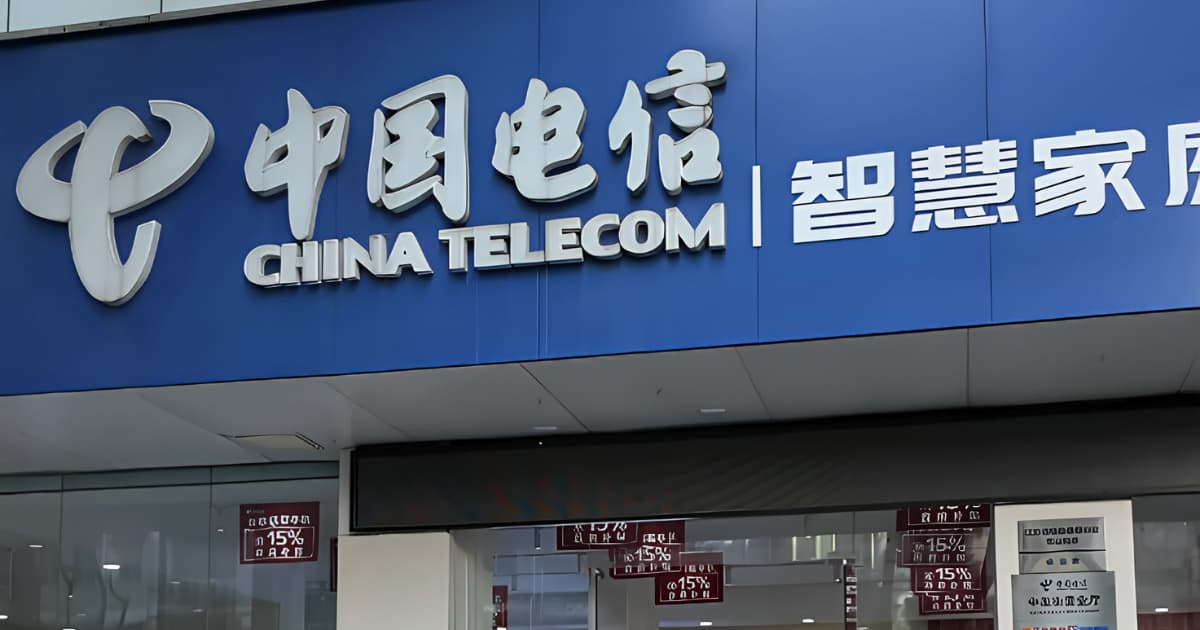
China Telecom (中国电信) - Great in cities, excellent English app
Don't overthink this choice. They're all reliable, they all have good data packages, and they all work nationwide. The main difference you'll notice as a foreigner is how English-friendly their apps are (China Telecom wins here), but honestly, with the Chinese language pack you installed in Chapter 3, you can navigate any of them.
Airport vs. Street Shop: The Trade-Off
You've got two main options for getting your SIM card, each with pros and cons.
Airport SIMs: Convenience Over Cost
If you're arriving at a major airport (Beijing Capital, Shanghai Pudong, Guangzhou Baiyun, etc.), you'll find SIM card counters right in the arrivals hall. Look for signs saying "SIM Card" or the carrier logos.
Pros:
Staff usually speak some English
You can get connected immediately
Tourist packages are pre-configured
No wandering around a new city trying to find a shop
Cons:
More expensive (¥100-200 for a month vs ¥50-100 at street shops)
Less flexibility in package customization
Tourist packages sometimes have weird limitations
Pro tip: Many airports offer specific "tourist SIM" packages. These are designed for short stays and come with hefty data allowances. If you're staying longer than a month, you might want to just grab one to get started, then switch to a better long-term deal once you're settled.
Street Shops: Better Deals, Less English
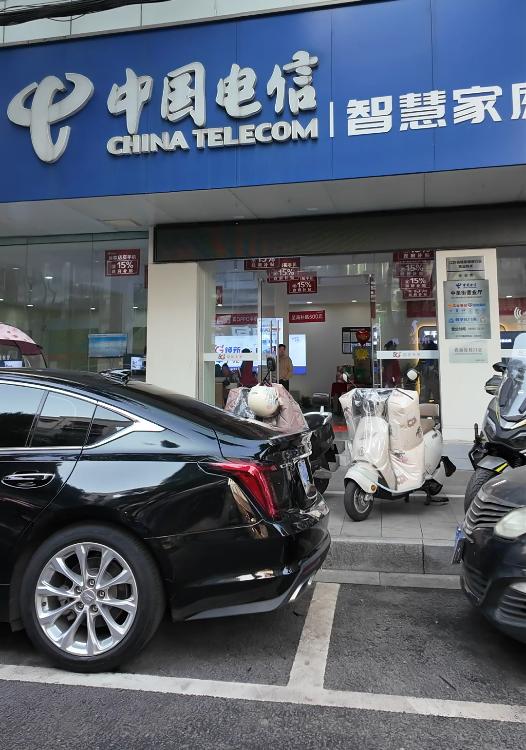
Every neighborhood has carrier shops - they're everywhere. You'll recognize them by the massive glowing logos. China Telecom shops are easy to spot - look for the blue and white branding.
Pros:
Significantly cheaper
More package options
You can negotiate or ask questions once you have a local helping you
Real local phone numbers (not tourist temp ones)
Cons:
English proficiency varies wildly
Can be intimidating if you're fresh off the plane
Requires some navigation to find one
The reality: Most teachers arriving in China go with the airport option first just to have something working, then either keep it or switch later. That's totally fine.
What You'll Need
Good news - it's surprisingly simple:
Required:
Your passport (that's it, really)
Maybe Required:
A Chinese address (hotel name works fine if they ask)
Cash for first payment (though cards usually work at airports)
The signup process: take a queue number, wait for your turn, show your passport. Most cities don't require proof of address anymore, but occasionally a shop will ask. If they do, literally just give them your hotel name or your school's address if you know it. They're not verifying anything.
The Signup Process
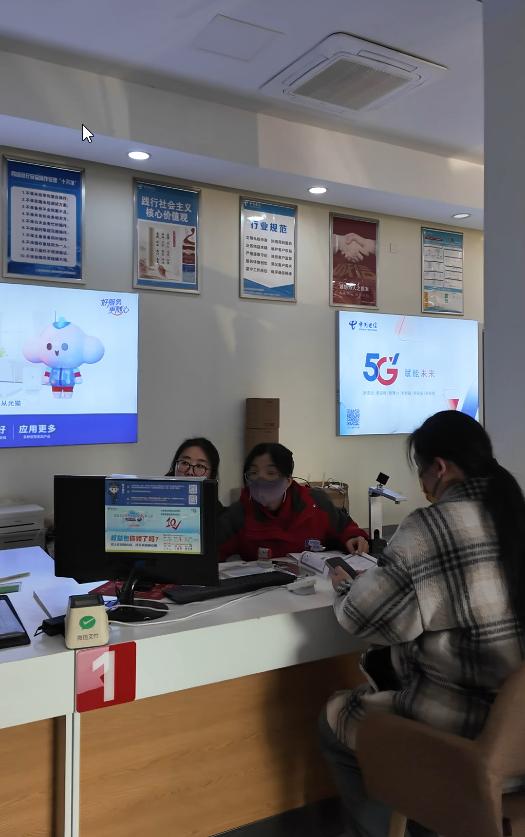
Walk in, take a queue number (usually from a machine near the entrance), wait for your number to be called, then head to the counter.
The staff will:
Ask for your passport
Might ask for an address (hotel is fine)
Show you package options
Ask you to sign some paperwork
Pop the SIM in your phone (or give it to you to do)
Done
This usually takes 10-20 minutes depending on how busy they are.
Google Translate reminder: If you're at a street shop and hitting a language barrier, bust out Google Translate from Chapter 3 (in the actual PDF that you can get when signing up)
Choosing a Plan
Plans are dirt cheap compared to Western countries. You're looking at:
¥50-100/month for most people (that's $7-14 USD)
Usually includes: unlimited calls/texts + 20-40GB data
Some plans have tiers: more data = slightly more money
If you're a heavy data user, go for 40GB+. If you're mostly on WiFi at home/school, 20GB is plenty.
Starting light: If you're unsure, just get a month of something mid-range. You can always top up more data or change plans next month. Unlike some Western contracts, there's no commitment here - it's all pay-as-you-go.
Payment: Cash First, Digital Later
Here's the chicken-and-egg situation: you need a Chinese phone number to set up Alipay or WeChat Pay, but those are the easiest ways to pay for your phone service.
Solution: Pay cash for your first month. Every shop accepts it. Then, once you've set up Alipay or WeChat Pay (covered in upcoming chapters), you can switch to digital payments for your monthly top-ups.
Using the China Telecom App
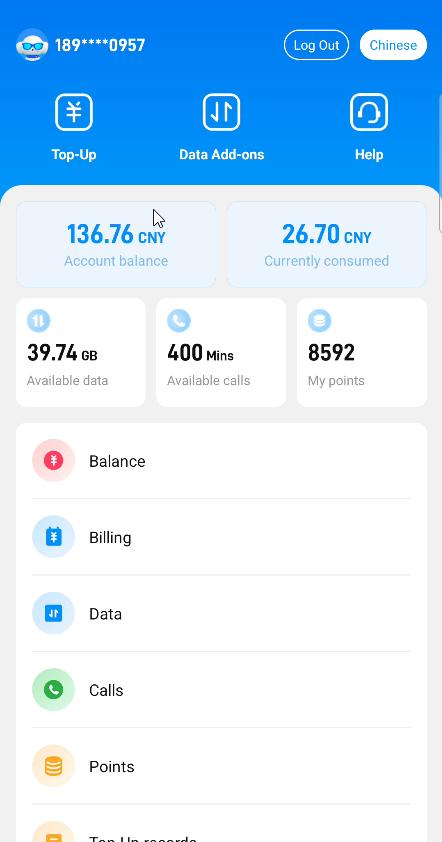
Once you're set up, managing your account is dead simple. The main screen shows everything at a glance: your balance, remaining data, and call minutes. The home screen gives you your phone number (top left), account balance, how much you've used this month, available data, and available call minutes.
Topping Up Your Account
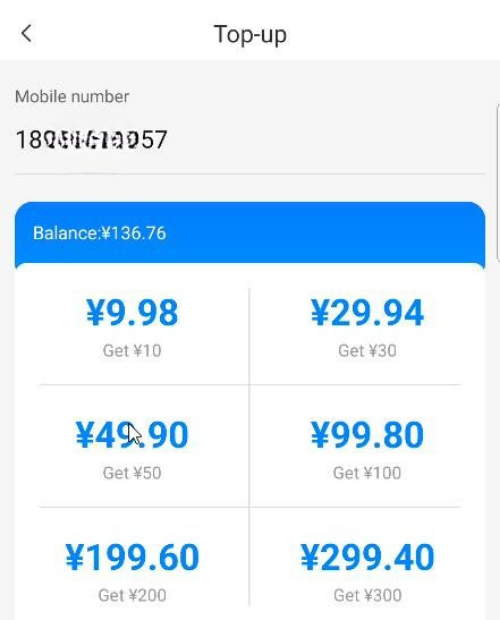
When you need to add credit, tap "Top-Up" (the ¥ icon at the top). Choose your amount - smaller amounts let you add credit in small increments. The pricing is a bit weird because of processing fees, so:
¥9.98 gets you ¥10 credit
¥49.90 gets you ¥50 credit
¥99.80 gets you ¥100 credit
Just pick whatever amount you need. For most people, ¥50-100 every month or two is plenty.
Paying with Alipay or WeChat Pay
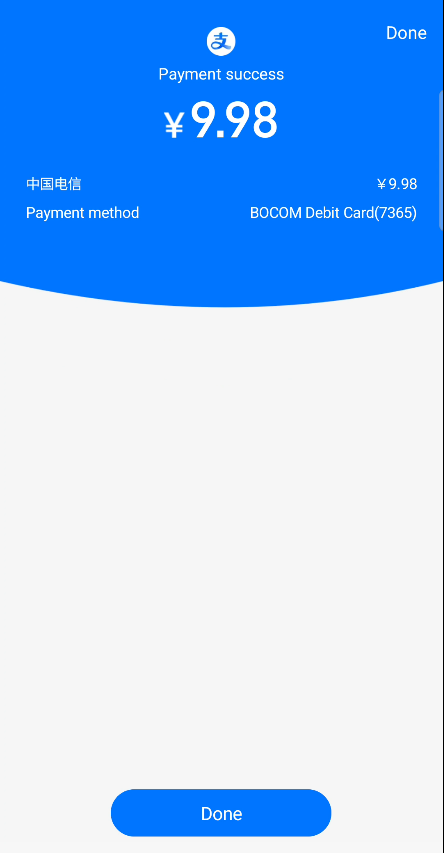
Once you've set up your digital payment apps, topping up is instant. The whole process takes maybe 30 seconds once you're set up. No websites to log into, no waiting for processing - just tap, pay, done.
Troubleshooting & Tips
"The shop is packed and I'm exhausted from my flight"
Airport WiFi acting up? Here's a trick: find the information desk or any airport staff member and politely ask if they can hotspot you their connection for a minute. Chinese service staff are incredibly helpful to confused foreigners, and I've seen this work countless times (all over Asia). You just need enough internet to pull up translation or maps potentially.
"How do I know if I'm running out of data?"
The app shows you in real-time. You'll also get SMS warnings in Chinese when you're at 80% and 90% usage. If you see a text message with percentages and data amounts, that's your warning. Just open the app and top up.
"Can I use my SIM in a different city?"
Yes! All three carriers work nationwide. You might see the network name change (China Mobile becomes "CHN-Mobile" or something in different regions), but it all just works. No roaming charges between provinces.
"What about Hong Kong or Macau?"
Different systems entirely. Your mainland SIM will roam there (and it's expensive). Either get a separate HK/Macau SIM if you're going frequently, use WiFi and just accept being disconnected for a day, or pay the roaming fees (not worth it for most people).
"International calls?"
Expensive. Use WeChat voice/video calls over WiFi instead - that's what everyone does anyway.