How to Open a Bank Account in China


How to Open a Bank Account in China
Your first week in China, you'll try to pay with your foreign card and discover the truth: China runs on its own payment universe, and a local bank account is the key that unlocks all of it. Without one, you can't use WeChat Pay or Alipay properly, your school can't pay your salary, and even topping up your phone becomes a small adventure. With one, everything just works.
The good news? Opening an account is much easier than you'd expect. I opened mine on a random Tuesday afternoon, in about forty minutes, with nothing but my passport and a bit of patience. Here's exactly how to do it.
The short answer: Yes, foreigners can open a Chinese bank account with a passport and a valid visa or residence permit. Bring your passport, a Chinese phone number, and your work or residence permit to any major bank branch. The account is usually opened the same day, your UnionPay debit card arrives in about a week, and you can link it to WeChat Pay and Alipay the same afternoon. Expect to pay almost nothing: a debit card costs around ¥10 a year (about $1.40), and most banks charge no monthly account fee.
Why You Need It
Why you need it: Almost everything in China is paid by phone. Street food, taxis, rent, electricity, your morning coffee — all of it goes through WeChat Pay or Alipay. Those apps need a Chinese bank card to work fully. Your foreign card will work at some hotels and big malls, but it will fail at the noodle shop, the metro, and the fruit stall. Your school will also pay your salary into a Chinese account, so you need one for payday anyway.
What's great about it: Once it's set up, you stop carrying cash. Your phone pays for everything, your salary lands automatically, and you can send money home from the same app.
What to Bring
Gather these before you go. Missing one item is the most common reason people get turned away.
Your passport. Original, not a photocopy. They will scan it.
A valid visa or residence permit. A tourist visa sometimes works, but a work visa or residence permit makes it far smoother. Some branches only open accounts for residents, so bring your residence permit if you have one.
A Chinese phone number. The bank sends verification codes by SMS, so you need a working Chinese SIM. If you haven't sorted your phone yet, do that first — here's my guide on getting a SIM card and phone setup in China.
Your work permit or employment letter. Some banks ask for proof of employment.
Proof of address (sometimes). A few branches ask for your rental contract or a letter from your school.
A Chinese-speaking friend. Optional, but honestly the best thing on the list. The forms are in Chinese, the staff may not speak English, and a friend who can translate turns a confusing hour into a quick errand.
Teacher tip: Go in the morning, right when the bank opens. Branches get busy after lunch. I went at 9 a.m. and was out before 10; the person who went at 3 p.m. waited an hour just for a number.
Which Bank Should You Pick?
China's big four banks all work fine for a newcomer, but they are not identical. Here's how I think about them:
Bank of China (中国银行, Zhōngguó Yínháng). My pick for most new teachers. The most foreigner-friendly, the most used to handling passports, and its app has a decent English version. It also has the most experience with international transfers, which matters when you want to send money home.
ICBC (工商银行, Gōngshāng Yínháng). The biggest bank in China, branches everywhere. Solid, but English support varies by branch.
China Construction Bank (建设银行, Jiànshè Yínháng). Another giant. Good if your school banks with them — salary transfers inside the same bank are instant.
China Merchants Bank (招商银行, Zhāoshāng Yínháng). The best app of the lot. Fewer branches in smaller cities, though.
My advice: pick whichever has a branch closest to your apartment, and check with your school first — many schools have a relationship with one bank and can point you to a branch that already knows the drill. That alone can save you a wasted trip.
Opening the Account, Step by Step
Here's the whole process. It looks long on paper, but most of it is waiting for your number to be called.
Walk in and take a number. There's usually a ticket machine near the door. Not sure which button to press? Ask the greeter — say "kāi hù" (开户, open an account) and they will point you to the right ticket.
Wait for your number. Use the time to fill in the account opening form if they hand you one. It asks for your name (exactly as on your passport), nationality, passport number, phone number, and address.
Hand over your documents. When your number is called, give the teller your passport, visa or residence permit, and phone. They will scan everything and type your details into the system.
Set your PIN. You will pick a 6-digit PIN for the card. Pick something you will remember and don't use your birthday. You'll type it twice on a little keypad.
Sign the forms. The teller will explain what each one is — or your friend will. One is usually an agreement for SMS notifications, which I recommend accepting.
Get your account number. The teller gives you a slip with your account number — the number your school needs to pay your salary. Photograph it and send it to HR the same day.
Wait for the card. Your UnionPay debit card (银联卡, Yínlián kǎ) is usually ready in about a week, though some branches print it on the spot. Either way, the account is active immediately, and you can receive money right away.
Teacher tip: Your name must match your passport exactly, including the order of your first and last names. Chinese systems put the family name first, and if the bank enters it backwards, your card will fail every online verification later. Check the slip before you leave and fix it on the spot.
Linking It to WeChat Pay and Alipay
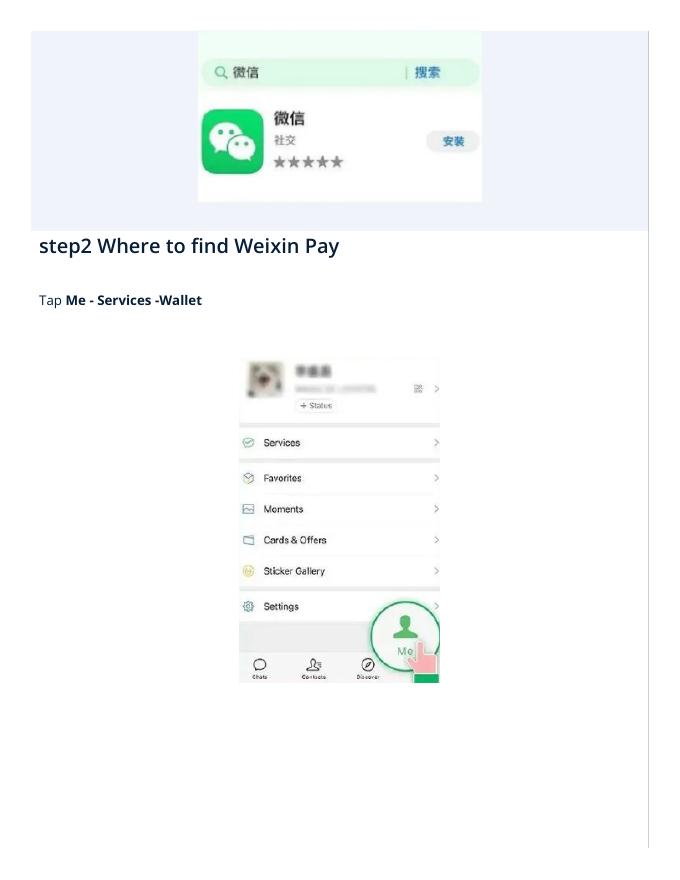
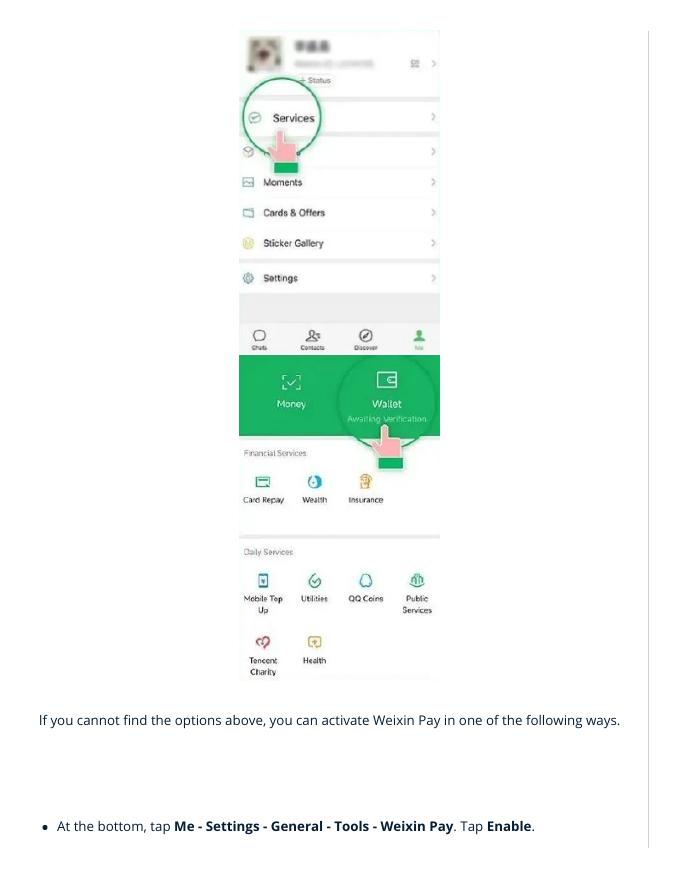
Your bank account is only half the story. The real magic is linking it to your phone, and this takes about five minutes per app.
WeChat Pay:
Open WeChat, tap Me, then Pay and Services.
Tap Wallet, then Bank Cards, then Add a Bank Card.
Enter your card number (or scan the card with your camera).
Enter your name exactly as on the bank slip, your passport number, and your Chinese phone number.
Enter the SMS verification code the bank sends you, set your 6-digit payment password, and you're done.
Alipay:
Open Alipay, tap Me, then Bank Cards.
Tap the + to add a card, enter the number, and confirm your details.
Enter the SMS code, and the card is linked.
Once both apps are linked, you can pay for almost anything by scanning a QR code — including your utility bills through WeChat. The first time you pay for lunch at a street stall this way, you'll wonder how you ever lived any other way.
What It Costs: My First Month
People always ask what it actually costs to have a Chinese bank account. Here's my real first month, from my own statements. Prices were around ¥7.20 to the dollar at the time.
Debit card annual fee: ¥10 (about $1.40) per year, taken once.
SMS notification service: ¥3 (about $0.40) per month, so ¥36 (about $5.00) a year. Worth every fen — those texts are how you know your salary arrived.
Opening deposit: ¥0. My bank asked for no minimum deposit.
ATM withdrawals at my own bank's machines: ¥0. Other banks' machines: ¥4 (about $0.55) per withdrawal, so I just use my own bank's ATMs.
Receiving my salary: ¥0.
Total first-year cost: about ¥46, or roughly $6.40. Compare that to the monthly account fees I used to pay back home, and China wins again.
Pro Tips
Open the account at a branch near your school, not your apartment. Your school's HR team probably already knows that branch, and the staff are used to foreign teachers.
Keep your bank's app in English. Bank of China and China Merchants Bank both offer an English interface. Set it on day one, before you need to find anything in a hurry.
Screenshot your account details. The day your card arrives, photograph the front of the card, the account slip, and the branch address. You'll need them more often than you think.
Don't change your phone number without telling the bank. Your account is tied to your Chinese number. If you get a new SIM, update it at the branch first, or your payment apps will stop working overnight.
Carry your passport the first time you use the card online. Some first-time online payments trigger an extra identity check, and having your passport in your bag saves a trip home.
Troubleshooting
My card was declined in WeChat Pay. Nine times out of ten, your name is entered differently in WeChat than at the bank. Delete the card and add it again, typing your name exactly as it appears on the bank slip — family name first, then given names.
The bank said they can't open an account for me. Some smaller branches don't handle foreign accounts. Go to a bigger branch of the same bank, ideally one near a university or an international hotel. They do this every week.
I never got an SMS code. Check that the bank has your current Chinese number, and that your phone can receive SMS from short codes. If you recently changed SIMs, the bank may still have the old number on file — update it at the branch.
My card hasn't arrived after two weeks. Go back to the branch with your passport and the account slip. Cards sometimes sit in a drawer because the bank tried to call you and couldn't reach you — ask them to check, and confirm your phone number is correct.
I lost my card. Call the bank's hotline immediately to freeze it — Bank of China is 95566, ICBC is 95588 — then go to the branch with your passport for a replacement. It costs about ¥10 (around $1.40) and takes about a week.
You've Got This
Opening a bank account sounds like the most boring chore on your China to-do list, and the queue is nobody's idea of fun. But it's the one errand that unlocks everything else. Do it in your first week, link it to your phone the same afternoon, and from that day on, China gets dramatically easier. Your salary arrives on time, your bills pay themselves, and you can buy a coffee without thinking about it.
If I could do it with phrasebook Chinese and a very patient friend, you can do it too. Take your passport, take a friend, go in the morning, and get it done. Future you will be very grateful.
FAQ
Can a foreigner open a bank account in China?
Yes. With a passport and a valid visa or residence permit, you can open an account at any major bank. A work visa or residence permit makes it smoother, and some smaller branches only serve residents.
Do I need a Chinese phone number to open a bank account?
Yes. The bank sends verification codes by SMS, and your payment apps are tied to the same number. Sort your Chinese SIM first, then go to the bank.
Which Chinese bank is best for foreigners?
Bank of China is the most foreigner-friendly with the best English app support. China Merchants Bank has the nicest app overall. ICBC and China Construction Bank have the most branches. Pick the one with a branch near your school.
How long does it take to open an account?
The account is opened the same day, usually in 30 to 60 minutes at the branch. The physical debit card takes about a week, though some branches print it on the spot.
Can I use my Chinese bank card with WeChat Pay and Alipay?
Yes, that's the whole point. Link the card in each app with your card number, name, and an SMS code, and you can pay almost anywhere in China by scanning a QR code.
Hero photo: the ICBC Jiangsu Provincial Branch building in Nanjing. Photo by そらみみ, via Wikimedia Commons, CC BY-SA 4.0.