Cost of Living in China for Teachers: 2026 Guide

Cost of Living in China for Teachers: 2026 Guide
So you're looking at a teaching job in China, and the offer letter says ¥18,000 a month. Is that a lot? Will you live well, or will you be counting coins by the 20th? The honest answer is that the same salary buys a completely different life depending on the city — and on whether your school provides housing. A ¥16,000 salary in Chengdu with a free flat can leave you with more money at the end of the month than ¥25,000 in Shanghai with no housing at all.
The short answer: A single teacher living a normal local life in China spends about ¥6,000–¥11,000 a month (roughly $900–$1,650 at about ¥6.7 to the dollar), rent included. Rent is the whole story: a one-bedroom in central Shanghai runs about ¥7,100 a month, while the same flat in Chengdu is about ¥2,900. Food, transport, and phone bills are cheap everywhere. If your school provides housing — and most public schools and kindergartens do — your biggest cost simply disappears, and saving ¥10,000 a month is realistic on an ordinary salary.
The Cost of Living in China: What a Month Actually Costs
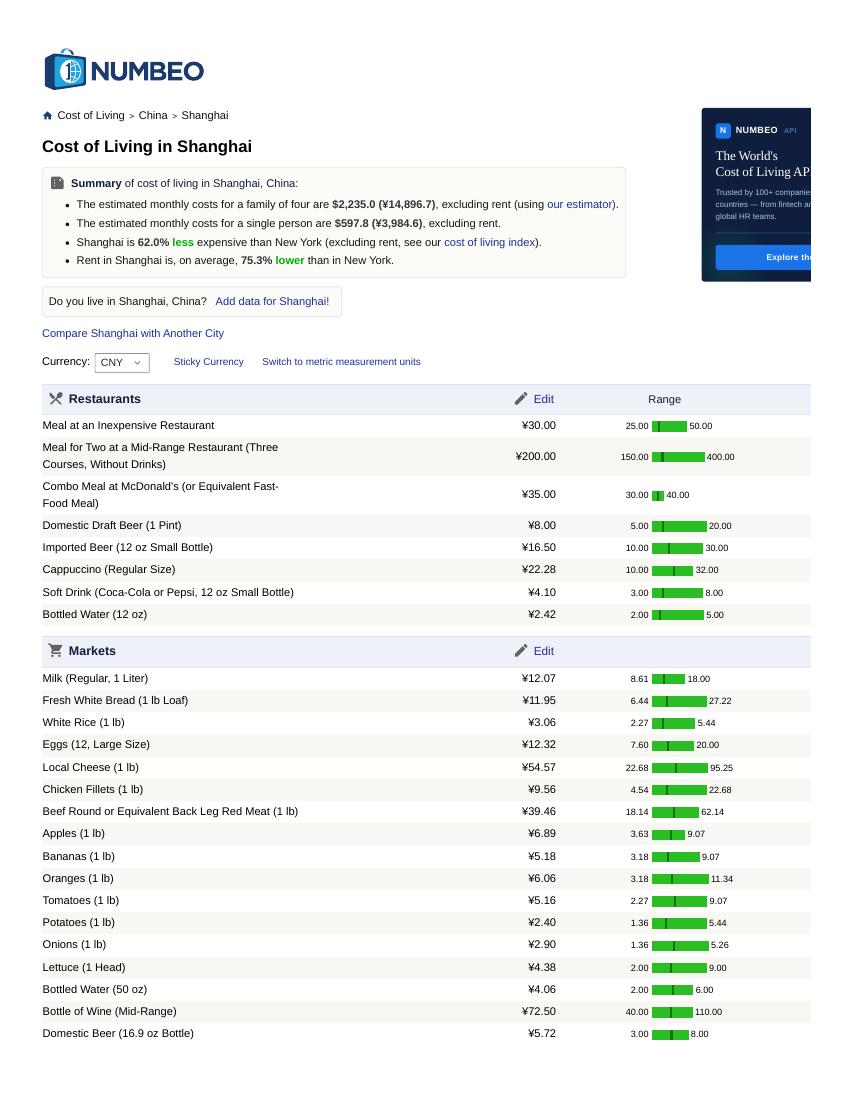
Let's start with the headline numbers, all from Numbeo's crowd-sourced price data read in November 2026. A single person in China spends about ¥3,348 a month on living costs before rent (about $500). Add rent, and the total depends almost entirely on the city:
Shanghai: about ¥11,100 a month (about $1,650) with a one-bedroom in the city centre
Beijing: about ¥10,110 a month (about $1,510) with a one-bedroom in the city centre
Shenzhen: about ¥9,200 a month (about $1,370) with a one-bedroom in the city centre
Guangzhou: about ¥7,600 a month (about $1,135) with a one-bedroom in the city centre
Chengdu: about ¥6,000 a month (about $900) with a one-bedroom in the city centre
Move one district out from the centre and every figure drops by a fifth to a third. And if your school provides your flat, knock the rent off entirely — your month in Chengdu drops to roughly ¥3,500 (about $520).
Put it next to home and the gap is startling: Numbeo's comparison with the United States puts consumer prices including rent 61.9% lower in China, restaurants 70.7% lower, and groceries 52.3% lower. Shanghai on its own is 62.0% less expensive than New York before rent, and rent there averages 75.3% lower than New York.
Rent: Your Biggest Line by Far
Why you need to get this right: Rent is the one cost that can double or halve your whole budget. Everything else is small change by comparison.
A one-bedroom flat in the city centre, from Numbeo's November 2026 data:
Shanghai: ¥7,104 a month (about $1,060); outside the centre ¥3,829 (about $570)
Beijing: ¥6,159 a month (about $920); outside the centre ¥3,441 (about $515)
Shenzhen: ¥5,026 a month (about $750)
Guangzhou: ¥3,416 a month (about $510)
Chengdu: ¥2,855 a month (about $425); outside the centre ¥1,690 (about $250)
Xi'an: ¥1,910 a month (about $285)
The pattern is the city tier, not the flat. Tier 1 cities — Beijing, Shanghai, Guangzhou, Shenzhen — charge Tier 1 rents. Tier 2 cities like Chengdu, Xi'an, Nanjing, and Hangzhou charge roughly half. The gap inside one city is just as big: in Shanghai, a one-bedroom in an expat neighbourhood runs ¥7,000–¥9,000 (about $1,045–$1,345), while a similar flat a few metro stops out in a local neighbourhood runs ¥2,500–¥4,000 (about $375–$600), per China Briefing's 2026 analysis.
Teacher tip: This is why the housing question matters more than the salary question. A school that provides a flat or pays a housing allowance is handing you ¥2,500–¥7,000 a month in value. When you compare offers, add the housing to the salary before you compare anything else. Our guide to English teacher salaries in China walks through the full package so you can compare offers properly.
Food: Eating Well for Very Little
What's great about it: Food is where China feels almost unfairly cheap. A meal at an inexpensive restaurant costs about ¥30 (about $4.50) in Shanghai, and a meal for two at a mid-range restaurant runs about ¥200 (about $30), per Numbeo's November 2026 Shanghai prices. A McDonald's combo is about ¥35 (about $5.20). A cappuccino is about ¥22 (about $3.30).
Cooking at home is cheaper still. From the same Numbeo Shanghai data: a litre of milk is about ¥12 (about $1.80), a pound of white rice about ¥3 (about $0.45), a dozen eggs about ¥12 (about $1.80), and a pound of chicken fillets about ¥10 (about $1.45). A weekly shop for one person at a local market or supermarket runs roughly ¥400–¥600 (about $60–$90).
Most teachers land somewhere in the middle: cooking a few nights, eating out most nights, and spending about ¥1,500–¥2,500 a month on food (about $225–$375). Eat like a local — noodle shops, dumpling houses, the little place on the corner — and you eat very well for less. Insist on imported cheese, Western brunch, and craft beer every weekend, and your food bill can double. That's a choice, not a cost of living.
Getting Around: The Metro Is Nearly Free
Transport is the smallest line in most teachers' budgets. A metro ride costs ¥3–¥7 (about $0.45–$1.05) depending on the distance, and a monthly metro pass in most cities runs ¥150–¥300 (about $22–$45). Buses are cheaper still, usually ¥1–¥2 (about $0.15–$0.30) a ride.
DiDi (滴滴), China's Uber, is cheap enough to use without thinking: a 20-minute ride across town typically costs ¥20–¥40 (about $3–$6). Our guide to getting around China with DiDi covers how to set it up in English. Between the metro, buses, and the odd DiDi, most teachers spend ¥200–¥400 a month on transport (about $30–$60).
Bills, Phone, and the Rest
The small stuff adds up to less than you'd think:
Utilities (electricity, water, gas): about ¥200–¥400 a month (about $30–$60) for a one-bedroom flat, more in summer with the air conditioning running. Some schools cover utilities in school housing — ask.
Phone and internet: a mobile plan with plenty of data costs about ¥80–¥150 a month (about $12–$22). Home broadband is usually ¥100–¥200 a month (about $15–$30), and many flats include it.
Health insurance: your school is required to provide it, but the quality varies. A hospital visit for something routine costs far less than back home — our guide to seeing a doctor in China has the real prices.
Fun: a movie ticket runs about ¥40–¥60 (about $6–$9) and a hotpot dinner with friends about ¥80–¥120 a head (about $12–$18). Budget ¥1,000–¥2,000 a month (about $150–$300) for going out.
A Real Month: Two Teachers, Two Cities
Here's what the cost of living in China looks like in practice, using the salary ranges from our salary guide and the costs above.
Mei, first-year teacher at a public school in Chengdu, ¥16,000 a month (about $2,390), housing provided:
Salary in: ¥16,000
Housing: provided, worth roughly ¥2,500 a month
Food: ¥2,000 — cooking some nights, eating out most nights
Transport: ¥300 — metro and the odd DiDi
Phone and internet: ¥100
Fun and social life: ¥1,500 — hotpot with friends, a weekend trip, a movie
Everything else: ¥500 — clothes, toiletries, the odd Taobao order
Tax: roughly ¥500
Left over: about ¥11,100 a month (about $1,655)
James, training-centre teacher in Shanghai, ¥25,000 a month (about $3,730), no housing, renting outside the centre:
Salary in: ¥25,000
Rent: ¥3,829 — a one-bedroom outside the centre
Food: ¥2,500 — eating out most nights
Transport: ¥400 — metro and DiDi
Phone and internet: ¥150
Fun and social life: ¥2,000
Everything else: ¥800
Tax: roughly ¥1,200
Left over: about ¥14,100 a month (about $2,105)
James earns ¥9,000 more and keeps about ¥3,000 more — but he works longer hours and gives up his Saturdays. Mei works 15–20 hours a week with long paid holidays. The salary number alone tells you almost nothing. Housing, hours, and the city tier decide what you actually keep.
The First-Month Cash Problem
One cost catches nearly every new teacher: the deposit. Chinese landlords typically ask for three months' rent upfront plus one month as a deposit — 付三押一 (fù sān yā yī), literally "pay three, deposit one." For a mid-range Shanghai flat, that's up to ¥35,000 (about $5,220) in cash before your first paycheck, per China Briefing's 2026 analysis.
Plan for it. Bring enough savings to cover the deposit, your first month's food and transport, and a buffer — ¥40,000–¥50,000 (about $6,000–$7,500) is a safe landing fund if you're renting privately in a Tier 1 city. If your school provides housing, you can land with far less. Either way, ask your school before you fly: is housing provided, is there an allowance, and when does the first salary actually arrive? A school that answers those questions clearly is a school you can trust.
Pro Tips
Compare the package, not the salary. A ¥20,000 offer with free housing beats a ¥24,000 offer with nothing, in almost any city.
Live one metro stop further out. In Shanghai or Beijing, moving outside the centre cuts rent by a third to a half, and the metro ride is 15 minutes.
Eat where the locals eat. The little noodle shop with plastic stools is usually better and always cheaper than the Western-style café.
Pay by phone from day one. Set up WeChat Pay or Alipay as soon as your bank account is open — cash is accepted almost nowhere now, and phone payment is how you get the local prices.
Compare real offers before you sign. Salaries and housing packages vary wildly between schools — browse English teaching jobs in China and compare the full package, not just the monthly number.
Save in RMB, send home in chunks. International transfers cost less per transfer when you send more at once — our guide to sending money home covers the cheapest routes.
Common Questions
I keep hearing China is no longer cheap. Is that true? Tier 1 cities are no longer cheap by Chinese standards — a comfortable international-standard life in Beijing or Shanghai runs ¥26,000–¥42,000 a month, per China Briefing. But a normal local life is still far cheaper than the West: Numbeo puts consumer prices including rent 61.9% lower than the United States.
Do teachers really save money in China? Yes — most save somewhere between $600 and $1,500 a month, and teachers with free housing in Tier 2 cities often save more. The ones who struggle are almost never on low salaries. They're the ones who didn't check whether housing was included, or who signed a lease in the most expensive part of town.
What costs more in China than back home? Imported food, Western-brand groceries, international school fees, and anything with an import label on it. Local equivalents are a fraction of the price.
You've Got This
The cost of living in China is one of the best deals in teaching abroad — not because everything is cheap, but because the things you buy every day are cheap, and the one expensive thing, rent, is the thing your school most often pays for you. Pick the city and the package with your eyes open, and you'll find that a teacher's salary in China buys a life that would cost two or three times as much back home.
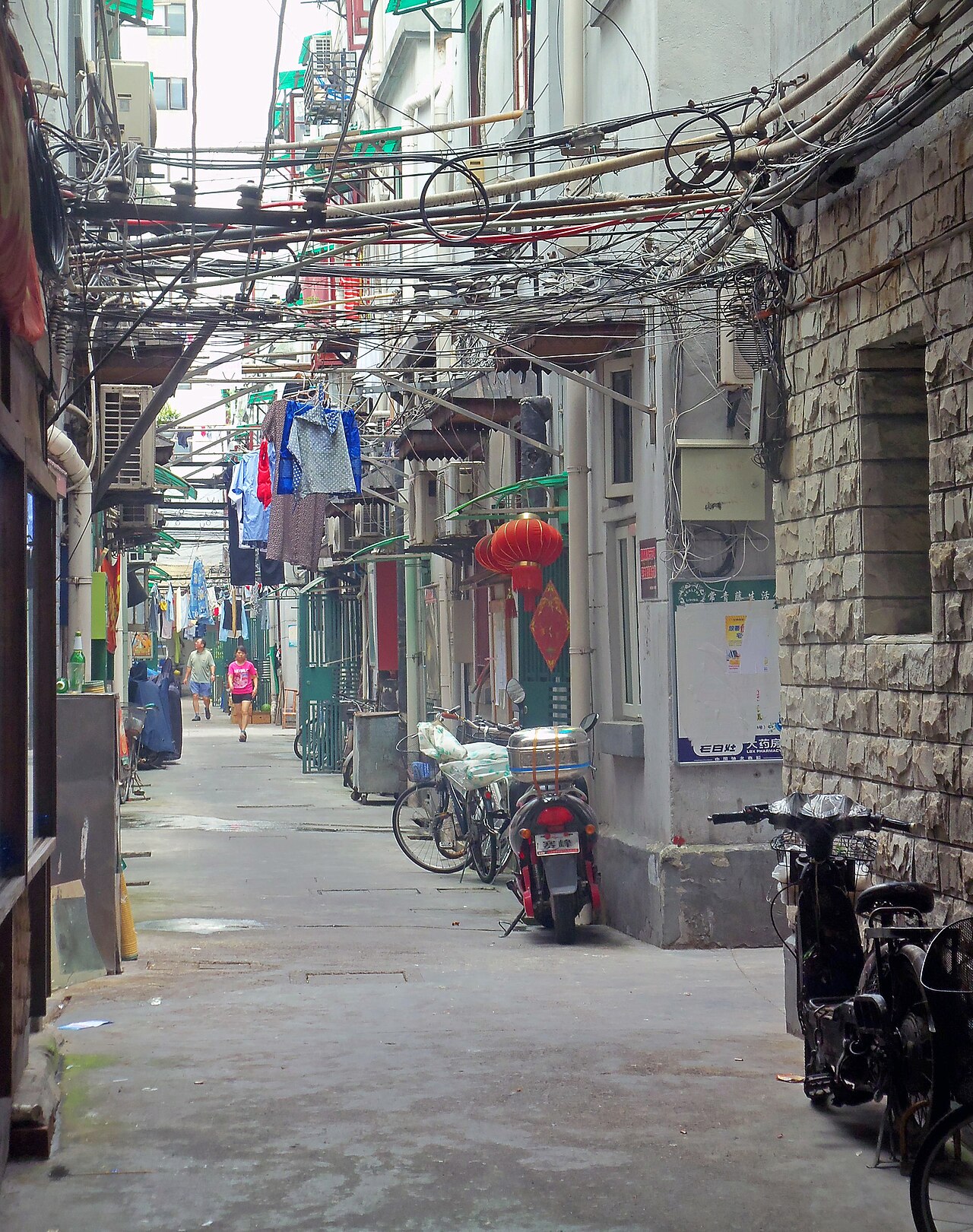
Hero photo: a residential alley off Yong'an Road, Shanghai, by Daniel Case, via Wikimedia Commons (CC BY-SA 3.0). Cost data: Numbeo, November 2026.
FAQ
How much does it cost to live in China as a teacher?
A single teacher spends about ¥6,000–¥11,000 a month (roughly $900–$1,650), rent included, depending on the city. With school-provided housing, the same life costs about ¥3,500–¥5,000 a month. Most teachers save $600–$1,500 a month.
What is the biggest cost of living in China?
Rent, by a long way. A one-bedroom in central Shanghai is about ¥7,100 a month, while the same flat in Chengdu is about ¥2,900. Food, transport, and phone bills are small by comparison — usually ¥3,000–¥4,000 a month combined for a single person.
How much is rent in China for a foreign teacher?
A one-bedroom flat in a city centre costs about ¥7,100 a month in Shanghai, ¥6,200 in Beijing, and ¥2,900 in Chengdu (Numbeo, November 2026). Outside the centre, rents drop by a fifth to a third. Many schools provide free housing or a housing allowance, which removes this cost entirely.
Is ¥20,000 a month a good salary in China?
Yes, for most teachers. On ¥20,000 with free housing in a Tier 2 city, you can live well and save ¥10,000 or more a month. The same salary in Shanghai without housing is comfortable but leaves much less. Always compare the full package — housing, flights, insurance, and bonus — not just the monthly number.
What should I budget for my first month in China?
Bring ¥40,000–¥50,000 (about $6,000–$7,500) if you're renting privately in a Tier 1 city, because landlords usually want three months' rent upfront plus one month as a deposit. If your school provides housing, ¥10,000–¥15,000 (about $1,500–$2,250) covers the first month comfortably.