Requirements to Teach English in China: Degree, TEFL & More

Requirements to Teach English in China: Degree, TEFL & More
China has some of the strictest rules in the world for foreign English teachers — and they are legal requirements, not school preferences. If you don't meet them, no school can sponsor your work visa, no matter how good your English is. The good news is the list is short and the bar is clear. Here are the requirements to teach English in China, what each one actually means, and what it costs to get qualified.
The short answer: To teach English in China legally you need a bachelor's degree in any subject, a passport from one of seven native-English-speaking countries, a clean criminal background check, and either two years of teaching experience or a 120-hour TEFL certificate. Your school then sponsors your Z visa and Foreigner's Work Permit. From job offer to landing, expect 4–8 weeks.
Requirements to Teach English in China at a Glance
A bachelor's degree or above, in any subject, from an accredited university
A passport from a native-English-speaking country — the UK, Ireland, the US, Canada, Australia, New Zealand, or South Africa
Two years of teaching experience, or a recognised teaching certificate — a 120-hour TEFL, TESOL, or CELTA is the standard
A clean criminal background check, issued within the last six months and apostilled
A health check after you arrive, plus a passport with at least six months of validity
Those five items come from the State Administration of Foreign Experts Affairs notice WZF [2017] No. 40, the rule every work-permit office in China still applies.
1. A Bachelor's Degree — Any Subject
Why you need it: A bachelor's degree or above is a legal requirement for the Z visa. Without one, a school cannot get you a work permit, full stop.
Your major does not matter. English, history, engineering, biology, business — any accredited bachelor's degree qualifies. A degree in education or English helps with top-tier schools, but it is not required for the visa.
How to use it: You will need the original certificate, authenticated for use in China. Since China joined the Hague Apostille Convention on 7 November 2023, that means one apostille stamp from a designated authority at home — the US State Department for Americans, the FCDO for Brits, Global Affairs Canada for Canadians — instead of the old multi-step consulate legalisation. Allow two to four weeks. This is the slowest document in the whole process.
2. A TEFL Certificate or Two Years of Experience
Why you need it: The rule is a bachelor's degree plus two years of relevant teaching experience — but the experience requirement is waived if you hold a recognised international language teaching certificate, such as a TEFL or TESOL. That waiver is how almost every first-time teacher qualifies.
How to use it: A basic accredited 120-hour online TEFL typically costs about $50–$300 and takes four to eight weeks of self-paced study. For named examples, The TEFL Academy's Level 3 120-hour course lists at $259, and the TEFL Institute's 120-hour course at €129 (about $150). A CELTA — the gold standard, with assessed classroom teaching — costs $2,500 or more and is what top international schools want alongside a home-country teaching licence. For a first job at a public school or training centre, the 120-hour certificate is enough.
3. The Right Passport — the Seven-Country Rule
Why you need it: China's official policy restricts foreign language teacher work permits to native speakers from seven designated countries: the United Kingdom, Ireland, the United States, Canada, Australia, New Zealand, and South Africa.
This is the requirement that surprises people most, and it is the least flexible — a legal framework, not a preference. Some provinces have quietly widened their accepted nationalities in 2026, and non-native speakers with a teaching licence and strong experience can occasionally secure a position, but the standard path runs through one of the seven passports. If your passport is from outside the seven, be honest with recruiters on day one, and ask the school to confirm with their local foreign experts bureau before you spend money on documents.
4. A Clean Criminal Background Check
Why you need it: A national-level criminal background check from your home country is required for the work permit, and it must be issued within six months of your application.
How to use it: Apply for it early — it takes the longest to arrive of any document, and the six-month clock runs from the issue date, not the day you file. In the US that means an FBI check; in the UK, an ACRO police certificate; in Canada, an RCMP check. Once it arrives, get it apostilled alongside your degree.
5. Age, Health, and the Rest
Age: The general range for work permits is 18 to 60, and since February 2026 Beijing and Shanghai have been strictly enforcing the age-60 ceiling for Category B and C permits, according to Morgan Lewis and KPMG. If you are over 55, ask your school to confirm with the local bureau before you commit.
Health: You must pass a post-arrival medical exam in China — blood work, a chest X-ray, and an ECG — at a designated clinic. Your school takes you there in your first weeks.
Passport: At least six months of validity and two blank pages when you apply for the Z visa.
What's New in 2026
Stricter enforcement since February 2026. Beijing and Shanghai began strictly enforcing work permit salary thresholds and the age-60 ceiling (reported by KPMG and Morgan Lewis). The part that gets misreported: the thresholds — four times the local average wage for Category B, roughly ¥49,700 a month (about $6,900) in Shanghai — apply only when salary is the evidence used to qualify for the permit. Most teachers qualify on degree plus experience or TEFL, not salary, so those figures are not a minimum teacher salary.
No more physical work permit card. Since December 2024 your work permit lives on your social security card instead. If a recruiter or an old blog post tells you to expect the little blue card, they are out of date. (Sources: KPMG and EY.)
What It Costs to Get Qualified: A Worked Example
Here is what one teacher — a first-timer from the US with a degree and no teaching experience, heading to a public school in Chengdu — spent before she flew. Prices at roughly ¥7.2 to the dollar.
120-hour TEFL course: $259 (about ¥1,865) — The TEFL Academy's Level 3 course
FBI background check plus apostilles for degree and background check: $200–$400 (about ¥1,440–¥2,880)
Z visa fee (US citizen, single entry): $140 (about ¥1,000)
Passport photos, printing, postage: $30–$50 (about ¥215–¥360)
Total before flying: $630–$850 (about ¥4,540–¥6,120)
The document costs are the fuzzy part — they depend on your state or country and how many documents need apostilling. The visa fee is the only fixed number, and your school may reimburse some or all of it, so ask before you pay.
For context, a first-year public-school teacher typically earns ¥10,000–¥20,000 a month (about $1,400–$2,800), housing usually included — see our salary breakdown before you sign anything.
What Comes Next: The Z Visa and Work Permit
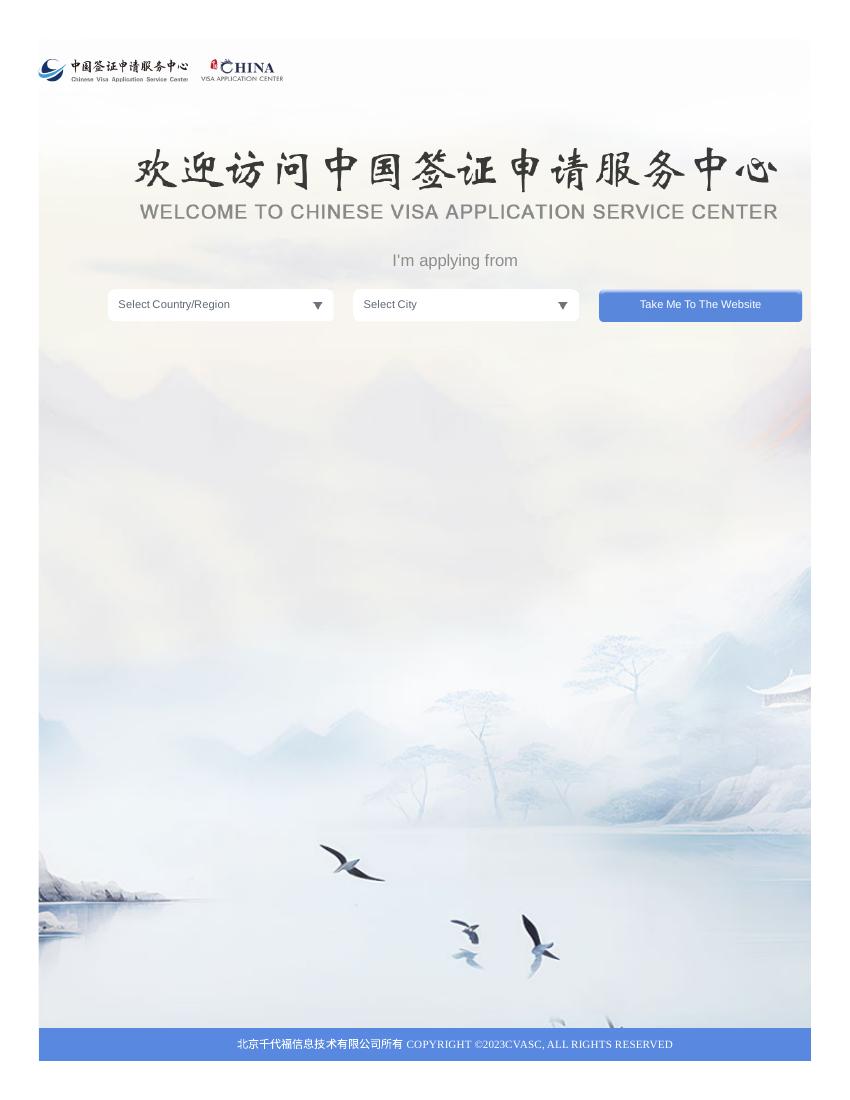
Meeting the requirements is only half the story — your school then turns them into a visa. Your school applies for a Notification Letter of Foreigner's Work Permit using your authenticated documents, you take that letter to a Chinese embassy, consulate, or Chinese Visa Application Service Center to get your Z visa, and within 30 days of arriving you convert it into a work permit and residence permit. Our step-by-step China work visa guide walks through every step.
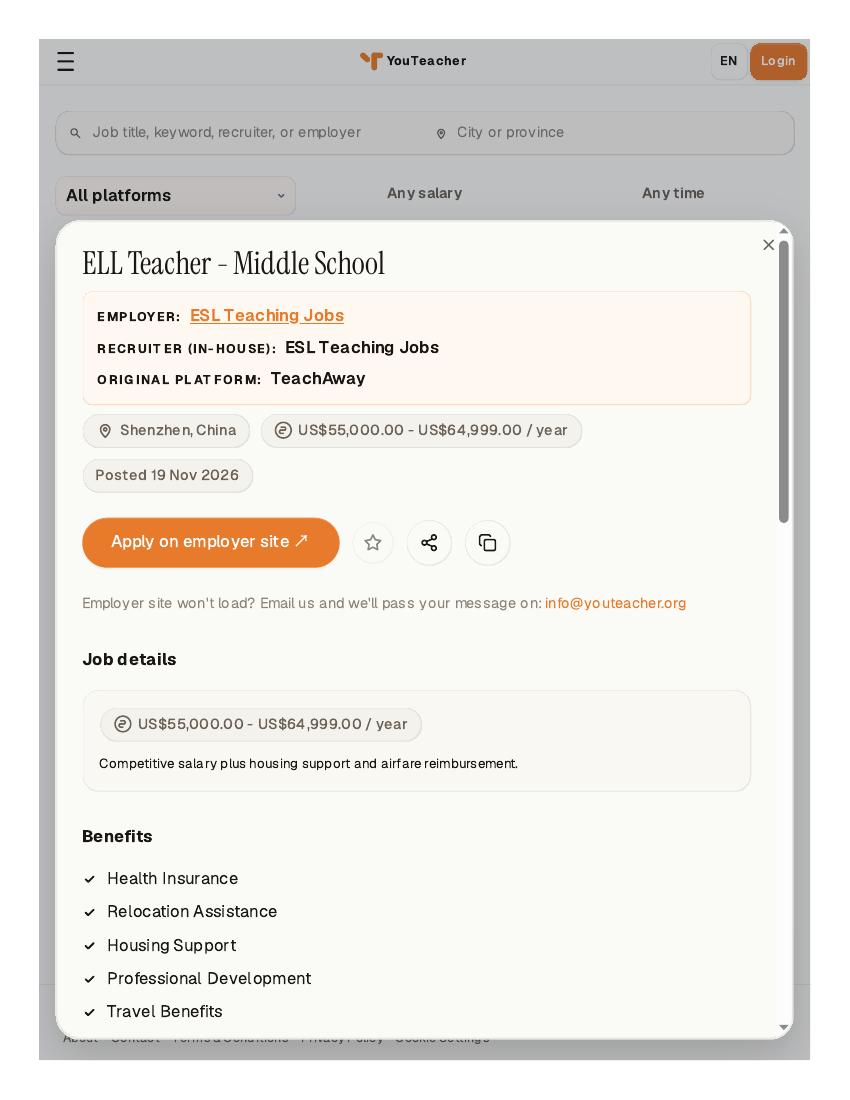
Once you know you qualify, the next step is finding a school that will sponsor you. Browse English teaching jobs in China and only apply to schools that confirm in writing that they will sponsor your Z visa. Our guide to teaching jobs in China covers pay, contracts, and how to spot a bad offer.
The One Rule Never to Break
Do not teach on a tourist visa, a business visa, or visa-free entry — not for a week, not "while the paperwork is sorted." Working without a Z visa and work permit is illegal employment: the fine runs ¥5,000–¥20,000 (about $690–$2,760), plus deportation and a re-entry ban of one to five years. The school gets fined too, which is why a legitimate school will never ask you to do it.
If a school tells you to enter on a tourist visa and start teaching, it is telling you on day one that it cuts corners on the law. Believe them — and find another school. Only apply to schools that will sponsor your Z visa.
Pro Tips
Start the background check first. It takes the longest to arrive, it must be less than six months old when you file, and everything else waits on it.
Get the TEFL before you apply, not after. A certificate in hand beats "I'm planning to take one" in every recruiter's inbox, and it waives the two-year experience requirement outright.
Ask the school to confirm sponsorship in writing. "We sponsor Z visas" should be in the offer, not in a WeChat voice message. If they won't put it in writing, walk away.
Check the full package, not just the salary. Housing, flights, insurance, and a completion bonus can be worth ¥5,000–¥10,000 a month on their own. Our cost of living guide shows what your money actually buys once you land.
Plan your first week, not just your flight. Once you land, the clock is ticking on the 30-day residence permit deadline, and the teaching starts fast — if you want a no-prep lesson for your first class, our own Point and Say – Classroom Objects game is ¥19 (about $2.60) and runs straight out of the box.
You have got this. The requirements look like a wall from the outside, but they are really a checklist: degree, passport, TEFL or experience, background check, health check. Tick them off one at a time, get a school that sponsors you properly, and a year from now you will be explaining all this to the nervous newcomer in the staff room.
FAQ
Can I teach English in China without a degree?
No — not legally. A bachelor's degree or above is a hard requirement for the Z visa and work permit. Any school that says otherwise is asking you to work illegally — the fine runs ¥5,000–¥20,000 (about $690–$2,760), plus deportation and a re-entry ban.
Do I need a TEFL certificate if I have two years of teaching experience?
No. The rule is a bachelor's degree plus two years of teaching experience, with the experience requirement waived if you hold a recognised teaching certificate such as a 120-hour TEFL. Either route qualifies — but most schools still expect a TEFL, and having one makes your application stronger.
Can non-native English speakers teach English in China?
It is much harder. China's official policy restricts foreign language teacher work permits to native speakers from seven countries: the UK, Ireland, the US, Canada, Australia, New Zealand, and South Africa. Some provinces have widened their lists, but the school must confirm it with the local bureau first.
How long does it take to get qualified to teach in China?
A 120-hour online TEFL takes four to eight weeks of self-paced study. After that, allow two to four weeks for apostilles and one to four weeks for the school's work permit notification — from job offer to landing, expect 4–8 weeks in total.
What is the age limit for teaching English in China?
The general range for work permits is 18 to 60, and since February 2026 Beijing and Shanghai have strictly enforced the age-60 ceiling for Category B and C permits. Exceptions past 60 are occasionally possible with a strong employer, but ask your school to confirm with the local bureau before you commit.
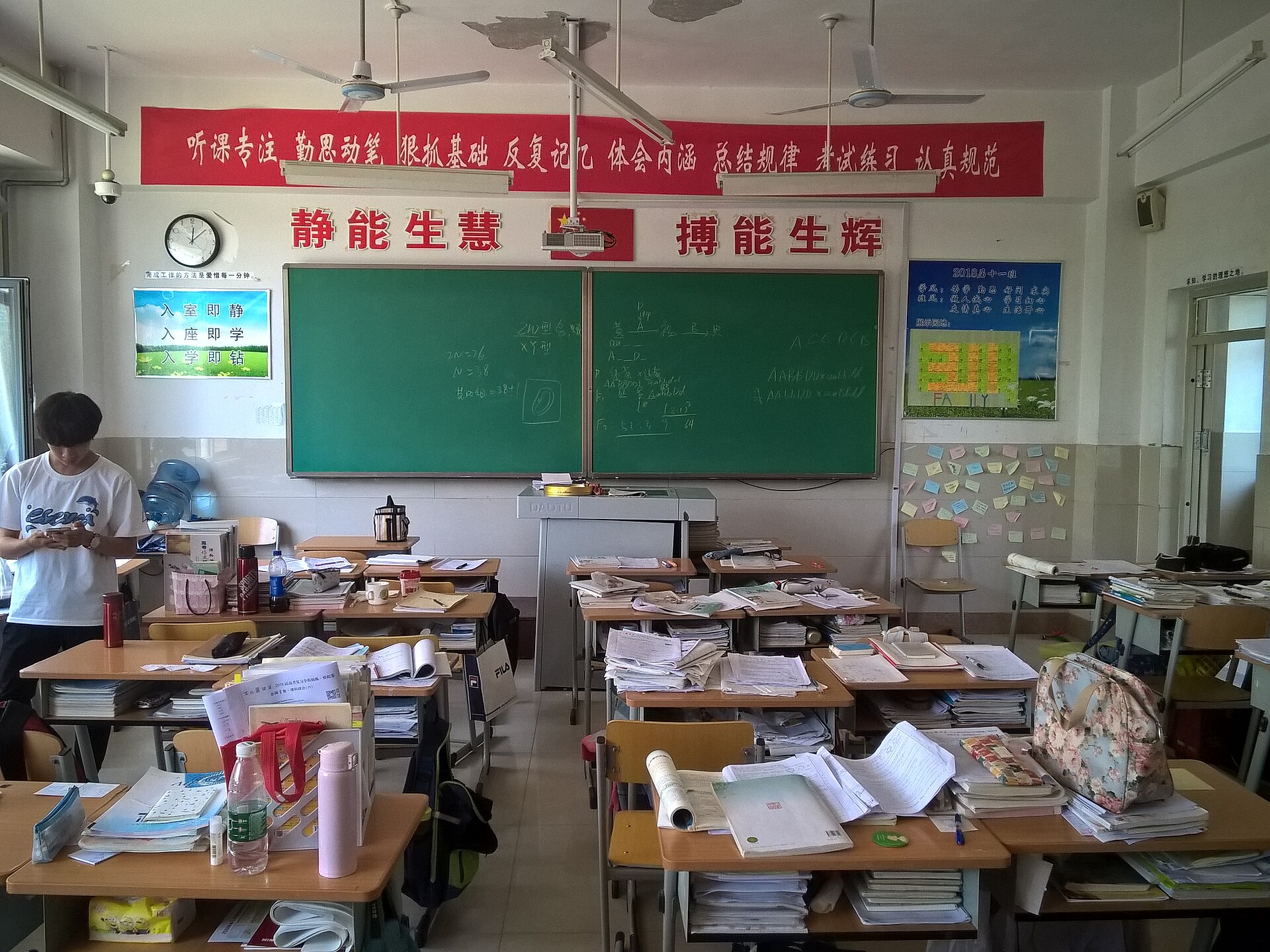
Hero photo: a classroom at Tieling High School, Liaoning — photo by Kychn, Wikimedia Commons, CC BY-SA 4.0.