China Work Visa for English Teachers: Step-by-Step Guide

China Work Visa for English Teachers: Step-by-Step Guide
You got the job offer. The school loves you, the salary looks good, your bags are practically packed. Then the paperwork starts. A China work visa is not one form and one stamp — it is a chain of three documents, each unlocking the next, and if any link is missing, you are stuck waiting.
The good news: the process is predictable, and thousands of teachers do it every year. This guide walks you through it, from checking you qualify to holding your residence permit, with the real costs and timeline.
The short answer: To teach English in China legally, you need a bachelor's degree, two years of teaching experience or a TEFL certificate, and a school that sponsors you. Your school applies for a Notification Letter of Foreigner's Work Permit, you use it to get a Z visa at a Chinese consulate, and within 30 days of arriving you convert it into a work permit and residence permit. From job offer to landing, expect 4–8 weeks.
Do You Qualify for a China Work Visa?
Before you spend a dollar on documents, check you clear the bar. China's rules for foreign language teachers (State Administration of Foreign Experts Affairs, notice WZF [2017] No. 40) have not changed at their core:
A bachelor's degree or above, in any subject, from an accredited university. Your major does not have to be English or education.
Two years of teaching experience, or a recognised teaching certificate. A 120-hour TEFL, TESOL, or CELTA certificate is the standard threshold, and it waives the two-year experience requirement.
A passport from a native-English-speaking country. In practice that means the United Kingdom, Ireland, the United States, Canada, Australia, New Zealand, or South Africa.
A clean criminal record, with a background check issued within the last six months.
A passport with at least six months of validity and two blank pages.
Most foreign language teachers land in Category B — professional talent, scoring 60 to 84 points. Your school's HR team does the scoring.
Teacher tip: Missing one piece? If you have the degree but no TEFL and no experience, get the TEFL first.
Not sure you clear the bar yet? Our guide to the requirements to teach English in China walks through the degree, TEFL, nationality, background check, and age rules in full. requirements to teach English in China.
How the China Work Visa Actually Works
Most first-timers miss this: the Z visa is not your permission to work. It is the middle link in a three-part chain.
The Notification Letter of Foreigner's Work Permit. Your school applies for this online, in your name, before you travel — without it, no consulate will issue you a Z visa.
The Z visa itself. You take the notification letter to a Chinese embassy, consulate, or visa centre in your home country. The Z visa is a single-entry visa that lets you enter China to take up employment.
The work permit and residence permit. Once you arrive, your school converts the Z visa into a work permit and a residence permit — the documents that actually let you live and work in China. The residence permit must be applied for within 30 days of entry.
Your China Work Visa, Step by Step
Step 1: Get a job offer from a licensed school
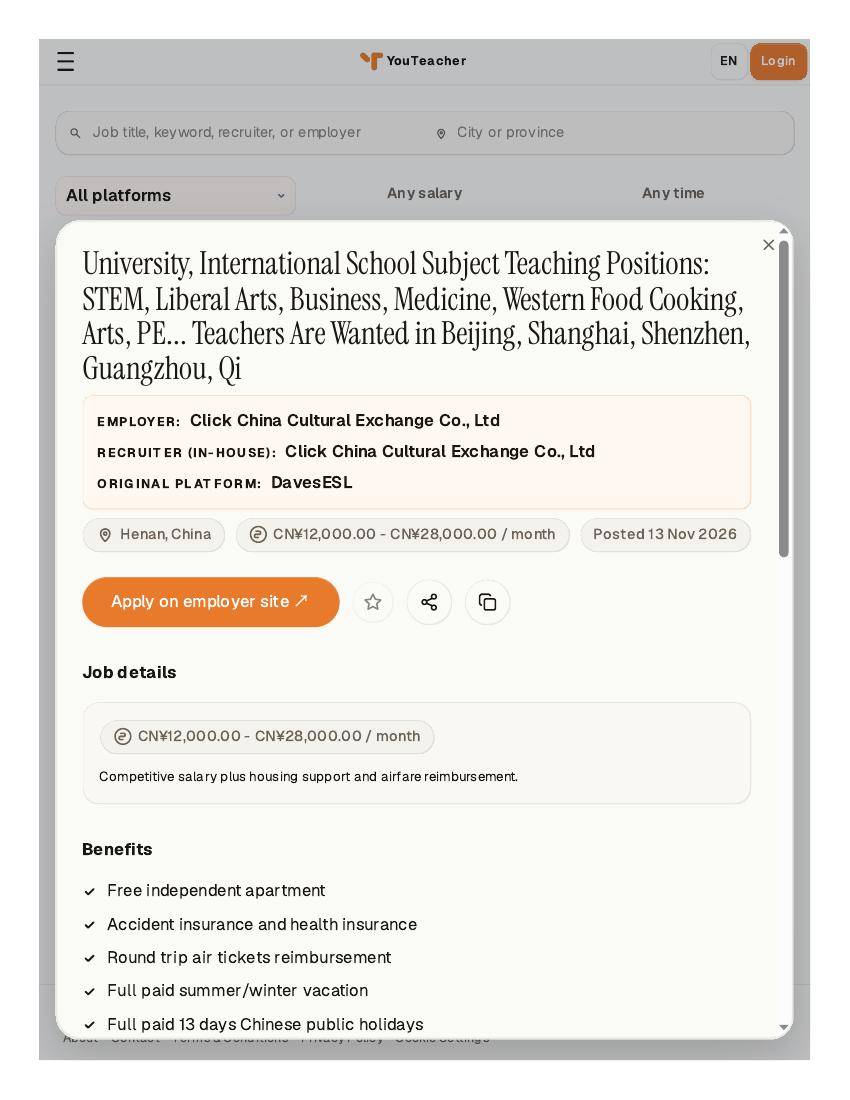
Only a licensed employer can sponsor your work permit — you cannot apply for a Z visa on your own. Browse English teaching jobs in China and only apply to schools that will sponsor your Z visa. If a school suggests you come on a tourist visa and "sort the paperwork later," walk away. Our English Teaching Jobs in China: Pay, Visas and How to Apply guide covers pay and contracts in full.
Ask the school to confirm in writing that they will sponsor your Z visa and work permit, and what costs they cover — before you sign, not after.
Step 2: Gather your documents
Your school will give you their exact list, but it always includes your passport, degree certificate, TEFL certificate (if you are using it instead of two years' experience), a background check issued within the last six months, proof of teaching experience (if you are using that instead), and a health check form. Some schools also want a health check before you leave; you will do another at a designated clinic after you arrive.
Step 3: Get your documents apostilled
China joined the Hague Apostille Convention on 7 November 2023, so your degree and background check now get an apostille — one stamp from a designated authority at home — instead of the old multi-step consulate legalisation. Allow two to four weeks, and start the moment you accept your offer. This is the long pole in the whole timeline.
Step 4: Your school applies for the work permit notification
Your school submits everything through China's online Foreigners Working in China system, which usually takes one to four weeks. When it is approved, they send you the Notification Letter of Foreigner's Work Permit. Guard it.
Step 5: Apply for the Z visa
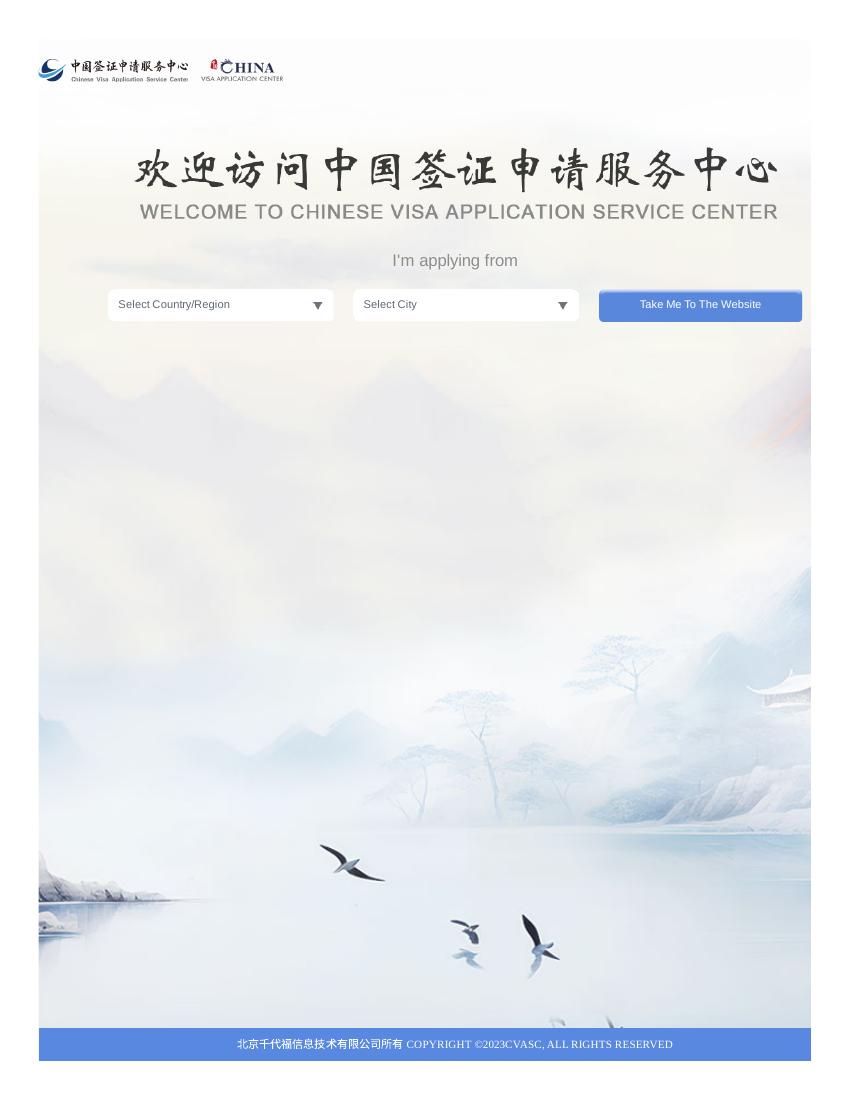
Take the notification letter to your nearest Chinese embassy, consulate, or Chinese Visa Application Service Center (visaforchina.cn — pick your country and city on the homepage). Fill in the form, hand over your passport, and pay the fee: standard processing runs three to seven business days, express one to three. Fees vary by nationality — US citizens pay a flat $140 (about ¥1,000), per Migaku's 2026 guide and International TEFL Academy.
Step 6: Fly to China
Your Z visa is single-entry, and the clock starts when you land: you have 30 days to convert it into a residence permit. Book your flight, pack, and go.
Step 7: Register your address within 24 hours
Within 24 hours of arriving at your home in China, you must register your address with the police. Hotels register you automatically; if you move straight into an apartment, you or your landlord must file it — since September 2026 you can do it online through the National Immigration Administration's website, app, or WeChat and Alipay mini-programs. The fine for skipping it can reach ¥2,000 (about $280).
Step 8: Health check, work permit, residence permit
In your first weeks, your school takes you to a designated clinic for the health check, then files your work permit and residence permit. The residence permit usually runs for your contract — typically 12 months — and lets you come and go freely. Once it is in your passport, you are done.
What It Costs: A Worked Example
Here is what one teacher, let's call her Sarah, spent before she flew — a first-timer from the US with a degree and a fresh 120-hour TEFL, heading to a public school in Chengdu. Prices at roughly ¥7.2 to the dollar.
Z visa fee (US citizen, single entry): $140 (about ¥1,000)
Apostille + background check: $200–$400 (about ¥1,440–¥2,880)
Passport photos, printing, postage: $30–$50 (about ¥215–¥360)
Total before flying: $370–$590 (about ¥2,660–¥4,250)
The document costs are the fuzzy part — they depend on your state or country and how many documents need apostilling. DiscoverChinaTEFL's 2026 guide puts it plainly: expect "a few hundred dollars in document fees." The visa fee is the only fixed number, and your school may reimburse some or all of it, so ask.
For context, a first-year public-school teacher typically earns ¥10,000–¥20,000 a month (about $1,400–$2,800), housing usually included — see our salary breakdown before you sign.
What's New in 2026
Stricter enforcement since February 2026. Beijing and Shanghai began strictly enforcing work permit salary thresholds and the age-60 ceiling for Category B and C permits (reported by KPMG and Morgan Lewis in early 2026). The part that gets misreported: the thresholds (four times the local average wage for Category B — roughly ¥49,700 a month, about $6,900, in Shanghai) apply only when salary is the evidence used to qualify. Most teachers qualify on degree plus experience or TEFL, not salary, so those figures are not a minimum teacher salary. If you are over 60, or your school planned to qualify you on salary alone, check the current rules with your employer first.
No more physical work permit card. Since December 2024 your work permit lives on your social security card instead — no more little blue card. If a recruiter or an old blog post tells you to expect one, they are out of date. (Sources: KPMG and EY.)
The One Rule Never to Break
Do not teach on a tourist visa, a business visa, or visa-free entry — not for a week, not "while the paperwork is sorted." Working without a Z visa and work permit is illegal employment under China's Exit and Entry Administration Law: the fine runs ¥5,000–¥20,000 (about $690–$2,760), plus deportation and a re-entry ban of one to five years. The school gets fined too, which is why a legitimate school will never ask you to do it.
If a school tells you to enter on an L (tourist) visa and start teaching, that is not a shortcut. It is a school telling you, on day one, that it cuts corners on the law. Believe them — and find another school. Only apply to schools that will sponsor your Z visa.
Pro Tips
Start the background check first. It takes the longest to arrive, it must be less than six months old when you file, and everything else waits on it.
Scan everything twice. Keep a colour scan of every document on your phone and in your email — three different offices will ask for the same file.
Keep your notification letter safe. Photograph it the moment it arrives — if it gets lost, your school has to reapply and your start date slips.
Plan your first week, not just your flight. Once you land, the clock is ticking on the 30-day residence permit deadline, and the teaching starts fast — if you want a no-prep lesson for your first class, our own Point and Say – Classroom Objects game is ¥19 (about $2.60) and runs straight out of the box.
If you visit China first to scout, check whether your passport qualifies for visa-free entry — see Visa-Free Travel to China for US Citizens: 2026 Guide. Visa-free entry lets you look, not work.
Troubleshooting: When Things Go Wrong
"My documents were rejected." Usually it is a background check older than six months, or an apostille missing a page. Ask the school exactly which document failed and why, fix that one item, and resubmit.
"My school is slow to file the work permit." A week or two of silence is normal. A month is not. Ask for the application number, which proves the filing exists. If they cannot give you one, start asking hard questions.
"I arrived and my school says the residence permit will take months." Processing normally takes one to three weeks after the health check. If it drags on, ask which step is stuck — the health check, the work permit, or the residence permit — and your school should be able to name the holdup. While you wait, see a doctor if you need one, and open a bank account as soon as your residence permit lands.
You have got this. The paperwork looks like a wall from the outside, but it is really a queue: one document, then the next. Get the offer, get the apostilles, get the letter, get the visa, get on the plane. A year from now, you will be explaining all this to the nervous newcomer in the staff room.
FAQ
Can I teach English in China on a tourist visa?
No. Teaching on an L (tourist) visa, an M (business) visa, or visa-free entry is illegal employment: a ¥5,000–¥20,000 fine (about $690–$2,760), deportation, and a re-entry ban of one to five years. You need a school-sponsored Z visa and work permit.
How long does the whole China work visa process take?
From job offer to landing, expect 4–8 weeks (Migaku and Earn in China agree on that range). The slowest part is the apostille — two to four weeks — so start it the day you accept the offer. End to end, allow 6–12 weeks.
Do I need a TEFL certificate if I have two years of teaching experience?
No — two years of experience or a recognised teaching certificate satisfies the rule; you need one or the other. A 120-hour TEFL is the simplest route if your experience is informal or hard to document.
What if my school will not sponsor a Z visa?
Find another school. One that will not sponsor your visa cannot legally employ you. Browse English teaching jobs in China and ask about sponsorship before you sign.
Can I change schools on the same work permit?
No. Your work permit names one employer and one position. To change schools, your new school must apply for a new permit, and you should not start until it is approved. Even one Saturday class elsewhere counts as working beyond your permit.
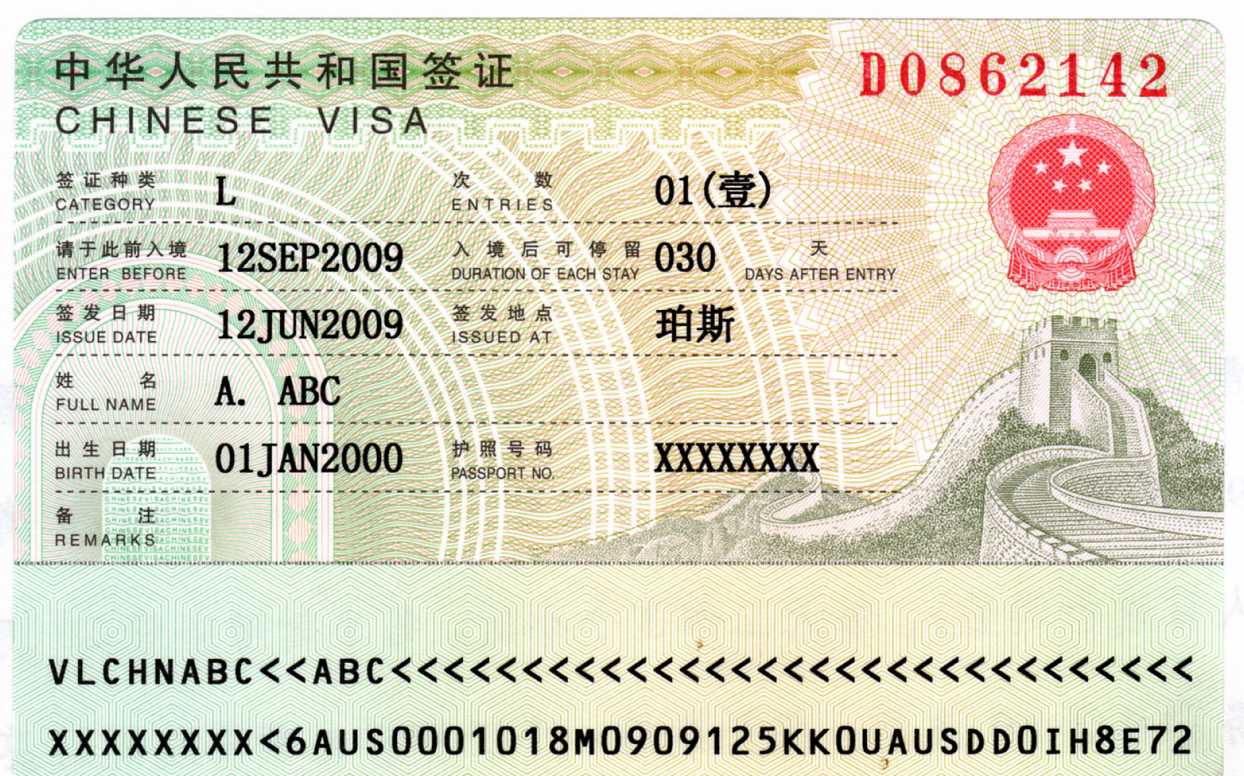
Photo: A Chinese visa sticker (sample), via Wikimedia Commons (public domain).