Jobs in China for Foreigners: Beyond Teaching


Jobs in China for Foreigners: Beyond Teaching
Ask anyone how a foreigner works in China and you'll hear the same answer: teach English. It's the easiest door in, and for good reason. But it's not the only door. If you can code, sell, design, write, trade or manage, there are real jobs in China for foreigners beyond the classroom — and some pay a lot more than teaching.
Here is the honest map: which non-teaching jobs actually hire foreigners, what they really pay, and how to land one.
The short answer: the best jobs in China for foreigners outside teaching are in tech, international trade, marketing, engineering, media and hospitality. Most need a bachelor's degree, a Z visa sponsored by your employer, and two years of relevant experience — and salaries run from about ¥15,000 a month (about $2,080) in entry-level entertainment work to ¥50,000 (about $6,945) or more in tech. Below are the roles that actually hire, what they pay, and how to get one.
The Visa Reality Comes First
Before the job list, the rule that decides everything: you cannot legally work in China on a tourist, business or student visa. You need a Z visa, and that starts with an employer: they apply for your work permit first, you take the notification letter to a Chinese embassy for the Z visa, then you enter China and convert it into a work permit and residence permit within 30 days.
Working on the wrong visa is not a grey area: fines run ¥5,000–¥20,000 (about $695–$2,780), plus possible detention, and under China's new exit and entry rules (State Council Order No. 841, in force since 15 September 2026) false statements in a visa application can mean a 1–5 year entry ban. If an employer ever suggests you come on a business visa and sort it out later, walk away.
Work permits come in three classes: A for high-level talent, B for most foreign professionals, and C for short-term workers. Since February 2026 the system has strictly enforced salary thresholds on the salary qualification route — Category A needs 6 times the local average wage and Category B needs 4 times. In Shanghai that's ¥74,604 a month (about $10,360) for A and ¥49,736 (about $6,910) for B; in Beijing ¥71,622 (about $9,950) and ¥47,748 (about $6,630). Those multiples only apply on the salary route. Most professionals qualify on degree plus two years of experience, so don't let the big numbers scare you off. Our China work visa guide walks through the whole process, and our requirements post covers the degree and experience rules.
Tech and IT Jobs
The biggest non-teaching field for foreigners, and the best paid. Shenzhen, Beijing and Hangzhou are the hubs. Chinese tech companies going global need people who understand Western users and markets. Roles that hire foreigners include software engineers, AI developers, mobile app engineers, product managers, UX designers and data analysts, paying about ¥25,000–¥50,000 a month (about $3,470–$6,945) — higher for senior engineers and AI specialists.
Teacher tip: a portfolio of shipped work matters more than a perfect CV.
International Trade and Business
China is the world's factory, and that means an enormous trade industry: import and export coordinators, supply-chain managers, freight forwarders, sourcing agents and sales managers for trading companies. Shanghai, Guangzhou, Shenzhen and Tianjin are the main hubs. These roles pay about ¥30,000–¥60,000 a month (about $4,170–$8,335) for experienced people, and a second language beyond English is worth real money — you're the bridge between Chinese suppliers and overseas buyers.
Teacher tip: if you're already teaching in China with a business or logistics background, this is one of the most realistic pivots.
Marketing, Creative and Content
Chinese brands reaching foreign customers — and foreign brands reaching Chinese ones — need marketers who understand both sides. Digital marketers, brand strategists, social media managers, graphic designers, videographers and photographers all find work here, mostly in Shanghai, Beijing, Guangzhou and Chengdu. Experienced people at international agencies or big brands can earn in the same range as trade roles. Freelance work alone doesn't get you a work permit — look for agency or in-house roles.
Writing, Media and Engineering
If you write well, China needs you: international companies, travel platforms and content agencies all need native-English editors and writers. Pay is usually project-based and lower than tech or trade, but the work is steady and flexible.
Engineering pays more: automotive, oil and gas, renewable energy, construction and project management all hire foreign specialists through multinationals, and a decade in a specialist field is worth the most here.
Hospitality, Sports and Entertainment
Hotels, resorts and restaurants in big cities hire foreign managers, chefs and front-of-house staff, and demand for foreign sports coaches is booming — yoga, football, personal training and swimming, mostly in Tier 1 cities. Entertainment is the wild card: DJs, musicians, dancers and performers work the club and events scene in Shanghai, Beijing and Shenzhen, with experienced DJs earning upwards of ¥15,000 a month (about $2,080). It's real money, but the least stable of these fields — make sure the venue sponsors your work permit.
How to Find Jobs in China for Foreigners
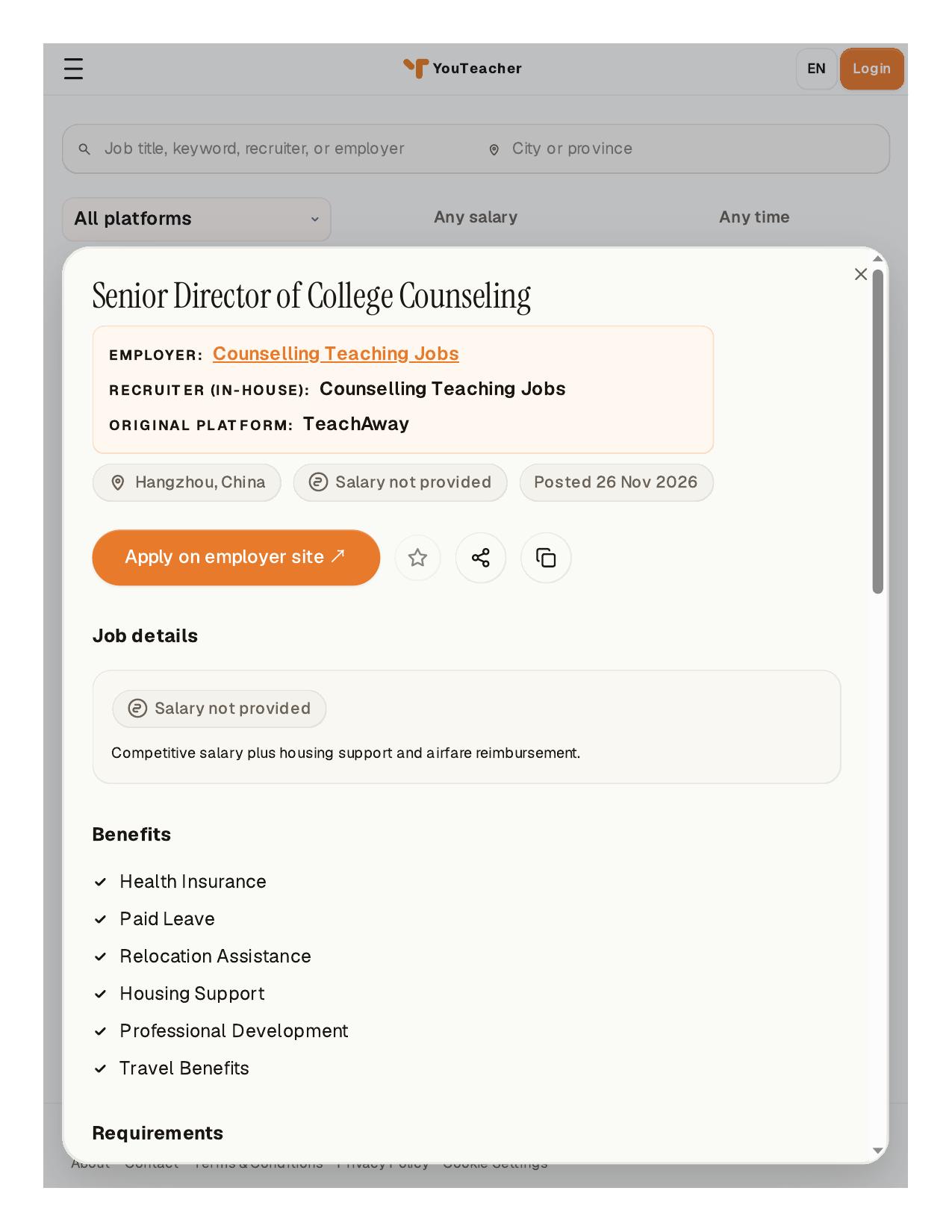
Here's the process that works, in order:
Check you qualify. A bachelor's degree plus two years of relevant experience. No degree means no work permit for these roles.
Pick your cities. Shanghai and Beijing pay and cost the most. Shenzhen and Hangzhou are the tech picks; Guangzhou is the trade pick; Chengdu is the best value — a one-bedroom there runs about ¥2,900 a month (about $400), against about ¥7,100 (about $985) in central Shanghai.
Search where foreigners actually get hired. HiredChina and LinkedIn are the starting points, plus the career pages of multinationals with China offices. Job fairs in Shanghai and Beijing are worth attending in person.
Tailor your CV to China. Keep it short, add your photo (normal here), and leave no unexplained gaps in your timeline — the 2026 system rejects them.
Interview properly. Expect a video call first, then an in-person interview if you're already in China. Ask who your sponsoring employer is, what the salary is, and what the work-permit timeline looks like. If they can't answer, that's your answer.
Get everything in writing before you sign. A contract is not a job until the paperwork is done.
Pete's take: "Get the start date, salary and every approval step in writing before you sign. A signed contract is not a job until their paperwork is done."
Let the employer run the visa process. They apply for your work permit notification, you get the Z visa at the embassy, you enter China, and you convert it to a work permit and residence permit within 30 days. Keep other applications alive until you hold the work permit notification letter.
Teaching is still the easiest sponsored job to get in China — a sensible plan B, or a way in while you look. Our English teaching jobs guide covers pay, visas and how to apply, and you can browse English teaching jobs in China while you search. If you do end up in a classroom, our Point and Say games are ready-made no-prep lessons for your first week.
A Worked Example: Marketing Manager in Shanghai
Sara is a composite, but every number is real: 29, marketing degree, three years at a London agency, now a digital marketing manager in Shanghai on ¥30,000 a month (about $4,170). Here's her month:
Salary in: ¥30,000 (about $4,170)
Rent: ¥3,829 (about $530) — one-bedroom outside the centre (Numbeo, November 2026)
Food: ¥2,500 (about $350) — cooking some nights, eating out most nights
Transport: ¥400 (about $55) — metro plus the odd DiDi
Phone and internet: ¥150 (about $20)
Fun and social life: ¥2,000 (about $280)
Everything else: ¥800 (about $110) — clothes, toiletries, Taobao
Tax and social insurance: about ¥3,500 (about $485) — approximate; HR gives the exact split
Left over: about ¥16,800 a month (about $2,335)
Rent is the whole story — the same flat in the centre would cost about ¥7,100 (about $985) and eat half her leftover. And ¥30,000 in Shanghai leaves her saving more than most teachers earn in total. For the city-by-city breakdown, see our cost of living guide for teachers. And if you're comparing with classroom pay, our teacher salary post puts teaching at roughly ¥10,000–¥25,000 a month (about $1,390–$3,470) for most roles, with university jobs at ¥23,000–¥28,000 (about $3,195–$3,890).
Pro Tips
Your degree matters more than your job title. No bachelor's degree, no work permit for these roles. Still studying? Finish the degree first.
Two years of experience is a real requirement, not a suggestion. Keep the proof (contracts, references, payslips), and don't fudge the dates — the 2026 system checks.
Learn survival Chinese even if the job is in English. It changes your daily life here, and employers notice.
Never pay a recruiter to find you a job. Legitimate employers pay the recruiter — anyone asking you for a fee is running a scam.
Keep a landing fund. Renting privately in a Tier 1 city? Bring ¥40,000–¥50,000 (about $5,555–$6,945) — landlords usually want three months' rent upfront plus one month as a deposit.
Check the visa-free rules before a job-hunting trip. Citizens of 50 countries can currently enter visa-free for up to 30 days — but that ends on 31 December 2026 for most of them, with no extension announced yet (Russia is the exception, extended to the end of 2027). Check the National Immigration Administration's list and the Chinese embassy notice before booking anything non-refundable for January 2027.
What If...
What if the job needs Chinese? Some do, especially trade and local-company roles. But multinationals, international agencies and export companies often work in English. Be honest about your level in the interview.
What if you're over 60? Category B and C work permits are now systematically refused for over-60s. Category A is the only route, and it needs high-level talent evidence.
What if the employer wants you to start on a business visa? Say no. Working on an M visa is illegal, the fines start at ¥5,000 (about $695), and a false statement can mean a 1–5 year entry ban. A real employer sponsors a real Z visa.
What if you want to switch employers? Cancel your current work permit first, then apply for the new one within three months of the cancellation. Line the new job up before you cancel.
Before You Go
Teaching English will always be the easiest way into China, and there's no shame in taking it. But if you've got a skill the market wants — code, trade, marketing, design, engineering — the door is open wider than most people think, and the pay ceiling is a lot higher than a classroom. The rules are clear: degree, two years of experience, a sponsoring employer, a Z visa. Get those four lined up and the rest is just a job hunt. You've got this.
Still weighing teaching against a non-teaching role? Browse English teaching jobs in China and compare what's actually out there. The market will tell you more than any guide can.
FAQ
What jobs can a foreigner do in China besides teaching?
Tech and IT, international trade, marketing and creative work, writing and media, engineering, hospitality, sports coaching and entertainment. Most need a bachelor's degree, two years of experience and a sponsoring employer for a Z visa. Tech pays the most: about ¥25,000–¥50,000 a month (about $3,470–$6,945).
How much can a foreigner earn in China outside teaching?
Tech pays about ¥25,000–¥50,000 a month (about $3,470–$6,945), trade and business about ¥30,000–¥60,000 (about $4,170–$8,335), and entertainment from about ¥15,000 (about $2,080). Most teaching jobs pay roughly ¥10,000–¥25,000 a month (about $1,390–$3,470) for comparison.
Do I need to speak Chinese to work in China?
Not for most foreigner-facing roles — multinationals, export companies and international agencies work in English. But trade roles, local companies and anything customer-facing usually need conversational Mandarin, and even basic survival Chinese makes daily life and job-hunting much easier.
What visa do I need to work in China?
A Z visa, sponsored by your employer: they apply for your work permit first, you take the notification letter to a Chinese embassy, and after you enter China you convert it into a work permit and residence permit within 30 days. Working on a tourist, business or student visa is illegal — fines run ¥5,000–¥20,000 (about $695–$2,780).
Can I switch jobs once I'm in China?
Yes, but cancel your current work permit first and apply for the new one within three months of the cancellation. Line the new job up before you cancel — the clock doesn't stop while you job-hunt, and you never want to quit into a gap without a new sponsor.
Hero photo: Pudong, Shanghai, November 2017, by King of Hearts, CC BY-SA 4.0, via Wikimedia Commons.